Monday, 20 February 2012

Dzyan - Electric Silence


Formed in 1972, this ethnic/kraut jazz quintet (Jochen Leuschner, Reinhard Karwatky, Gerd Bock-Ehrmann, Deiter Kramer, and Ludwig Braun) released their self titled album the same year in a relative discretion. This album made an exploration in long / space rock improvisations relied on jazz grooves and weird electro -acoustic sounds. The "ethnic", mystical elements are obvious notably due to the acoustic percussions rhythm sections. Compositions are mainly instrumental and improvised, brightly showing the technical capacities of the musicians. After several departures the band will be organised under a trio form, recording in 1973 the seminal "Time Machine". This album features astonishing manifestations of freaky fusion jazz exercises mixed with weird experimentations and mysticism. This album was recorded at Dieter Dierk's mythical studio. After this very convincing effort, the band recorded what we can consider to be his masterwork "Electric Silence". It combines with passion a stylistic jazz rock to nice Eastern elements. A very pleasant journey in "kraut", "kosmische" eccentricities.
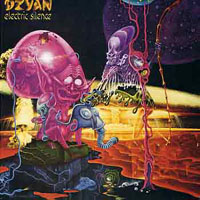


Dzyan Electric Silence album cover

1. Back To Where We Come (8:57)
2. A Day In My Life (4:03)
3. The Road Not Taken (4:54)
4. Khali (4:55)
5. For Earthly Thinking (9:38)
6. Electric Silence (4:30)


Electric silence is a spiritual journey through eastern meditative gardens to Indian guru temples, to panicked lysergic states, to quiet contemplation in space, truly an uncompromising work of ambient, atmospheric, psychedelic and spiritual goodness.
Full credit must be given to the musicians who play on this album as the musical technicality is absolutely superb. My particular favourite part of this album is the percussion, from the Balinese xylophone stylings of 'Back to where we come from' to the Djembe freak outs of 'A day in my life' to the atonal steel drums and world percussion wailing of 'For Earthly thinking' to the general conventional drum kit jazz fusion grooves the percussion on this album is some of the best I have come across in variety, competency, musical contribution and relevance. That isn't to detract from the contribution made by the other 2 members of the band, there are some awesome bass grooves and the sitar on this album is particularly amazing.



Friday, 8 July 2011

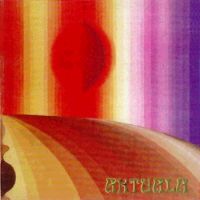
Aktuala - Aktuala


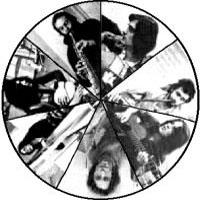
Aktuala picture
Both passionate collectors of ancient and ethnic instruments, husband and wife Walter and Laura Maioli got together in 1973 with sax player Caniele Cavallanti, guitarist Antonio Cerantola and percussionist Lino Vaccina to form AKTUALA (which means 'actually' in Esperanto). This is a furiously eclectic band whose Arabian, African and Indian themes are built around trance-inducing repetition. Apart from OREGON, they were one of the first to craft a coherent, gimmick-free hybrid of improvisional jazz with a pan-cultural approach to ethnic music, although theirs is much more loosely conceived than that of OREGON. They released three albums between 1973 and 1976 and then broke up. Walter Maioli is today recognized among Italy's foremost experts in prehistoric music-making.

Their second album, "La Terra" (74), is considered their masterpiece, surpassing even the more ambitious but poorly recorded "Tappeto Volante" (76). "La Terra" contains four extended instrumental tracks that combine Indian percussion, strains of American jazz and blues as well as Mediterranean and North African ethnic music. It features additional musicians each mastering yet another ethnic instrument: among them are Trilok Gurtu - who later went on to play with John McLaughlin and OREGON - as well as saxophonist Daniele Cavallanti and guitarist Attilo Zanchi, both now well-established members of the Italian jazz scene.

AKTUALA's material isn't kind to the symphonic ear: it is instinctive, primordial music full of dreamy darkness and mystery. Should please fans of THIRD EAR BAND, CLIVAGE and fans of free jazz and avant-garde.


1. When The Light Began
2. Mammoth R.C.
3. Altamira
4. Sarah' Ngwega
5. Alef's Dance
6. Dejanira


 The album opener is named perfectly as "When The Light Began", as in it a peaceful and mysterious mantra arises slowly from the void, and presents an aural landscape with exotic birds. In this grove we can listen to the beautiful acoustic guitar driven music, upon which tenor instruments do pleasant solos. In addition of acoustic guitar there's percussions enough for two players focusing on them in this music, and there are also some winds and harmonica, and string instruments. The overall feeling is very Near East oriented, and one can nearly see a water pipe's smoke trail being rising from the focal point of the turning vinyl and stylus. There are few different themes in this song, and this kind of music works pleasantly as both as ambient music or for more severe meditating. "Mammoth R.C." gets it's influence from Japanese music I think. It starts with a haunting flute, which makes space for solitary bass drums. After the solemn rhythms some kind of chaotic dragon dance begins, which then returns to the slowly pulsing rhythms of the drums. "Altamira" starts also with ethereal soundscapes, and the melodies of the winds have a slow and delicate dialogs over it, here feeling returning to the sounds of Islamic world. "Sarah' Ngwega" continues the wind driven feeling, but contains sadly also a nasty fade-out, and isn't even otherwise the most memorable of these tracks. "Alef's Dance" has a strong rhythm, with flutes soloing in an exotic Near East scale. Guitars also play an interesting melody, which is joined by a string instrument and flutes as the rhythm takes a turn to different direction. There's also a disappointing fadeout at the ending of this jam, though it's done a bit more carefully as many other fadeouts, as the instruments disappear to the void in different speed. The last tune "Dejanira" is very mellow and slow, driven by pretty acoustic guitar, and accordion and saxophone soloing over the strong blasts of wind and delicate percussions, being very calming and stimulating in the same time.


Clark Hutchinson - A = MH2


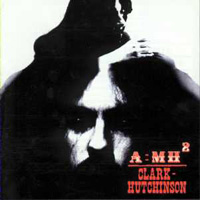
Clark Hutchinson - A=mh2 CD (album) cover Clark Hutchinson picture


1. Improvisation on a Modal Scale (10:00)
2. Acapulco Gold (7:00)
3. Impromptu in 'E' Minor (8:30)
4. Textures in 3/4 (11:00)
5. Improvisation on an Indian Scale (13:50)


Vastly superior to this duo's other two releases - the messy 'Gestalt' and the underwhelming 'Retribution' - 'A=,MH2' is a truely psychedelic, late-1960's Indian/Raga/psych/folk/prog marathon that finds an almost perfect balance between the east and the west, the raga and the rock, and the calm and the crazed. Made up of multi-instrumentalist Andy Clark and guitar-virtuoso Mick Hutchinson, the aptly-named 'Clark Hutchinson' met sometime during the 1960's when both musicians could be found in the underground group Sam Gopal Dream. From the sound of their music it seems likely that the twosome might have been fond of the odd herbal-or-psychotropic tipple, and after the demise of the oddly-monikered Sam Gopal Dream, the duo decided to pair-up and explore the sounds of India and beyond, merging those exotic sounds with a western 'rock' dynamic. So far, so pretty high-minded and Hippie-dippie. But hey, it was a different time back then, and it sounded good. Unbelievebly, experimentation was the creative watchword at the tail end of the sixties/beginning of the 1970's, and any musicians trying this sort of thing in 2010 would be instantly straightjacketed 'World Music'. Clark Hutchinson may have had lofty ambitions and seriously leftfield practices, but they also had immense talent and, dare we say it, foresight into the natural progressive arc of rock music(!). Along with fellow brits Jade Warrior, who produced three excellent oriental-tinged prog/folk/rock albums at around the same time, Clark Hutchinson were part of a small niche of artists who eschewed the bluesy or the overtly-progressive in favour of casting their sonic nets to lands farther afield. 'A+MH2' is possibly the apex of the genre - strong words, I know - because it positively drips with an earthy authenticity that truly places this album as lovingly-crafted epoch to the now stereotypical sitar-and-tabla drenched style of Indian music. It's also a damn good LP. It's easy to see where modern groups such as San Francisco's mind-melting psych-rockers Wooden Shjips(the 'j' is deliberate) get their epic, motorik-grooved and deeply trippy soundscapes from, and from start-to-finish the whole album reverberates with cosmic bliss for those in love with the psychedelic side of psych/rock. Without a doubt, one of the trippiest albums from the trippiest period in modern music. And that's no mean thing.


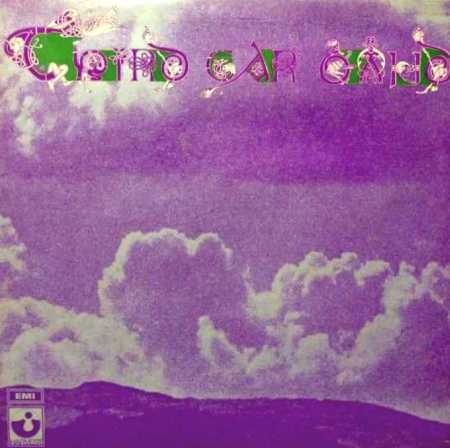
Third Ear Band - Third Ear Band

What is Third Ear Band?


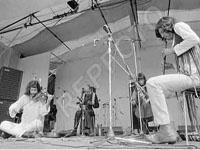
Third Ear Band picture
THIRD EAR BAND originated from Canterbury and started out as a psychedelic band called THE GIANT SUN TROLLEY gaining residency in south-London clubs doing long and improvisations and eventually changing their names to THE HYDROGEN JUKEBOX, recording one live album as such with Sweeney's percussions as scissor's clipping noise (with the mike attached to them) as he progressively undressed completely his girlfriend by clipping her dress during the conert (cut-out were very "in" at that time). Having finished their concert recording they discovered all their equipment stolen. So by sheer coincidence and obvious necessity, they became an acoustic band taking the name THIRD EAR BAND.
They are considered by many to be the first who invented the term "world" music. Published during the late 60s an album as "Alchemy" is seen as a landmark of ethnic fusion music, including many elements of improvisations and obvious eastern and medieval accents. They used a lot of "raga" instrumentations thanks to cyclical, dancing oboe patterns and "tabla" percussions. They often included jazzy rock parts next to India spiritual music. Stylistically this is a band who have brought to the fore a kind of "transcultural" music. Their impressive and cult first effort was followed by what we can consider to be the summit of their career. Their self titled album recorded in 1970 is an outstanding collection of ethereal, ethnic improvisations, totally floating, extatic, consequently directed to a high level of consciousness. A real travel through suggestive, imaginative dreamscapes. The music is executed with genius and always orientated in favour of various acoustic experimentations. Originally released in 1972 for the Roman Polanski Movie their following "Macbeth" carries on this intense, trippy musical adventure but stresses the folk & medieval acoustic structures (including for the first time some vocals). Atmospheres are sometimes creepy, sinister admitting weird and melodic guitar lines. The music is less improvised and really turned to efficient, enchanting, moody and medieval ambiences. This one is recognised as their most popular effort. After a long break the band recorded in 1988 the album "live ghost" with a new line up, continuing a similar musical experience, always making a fusion between a sensitive raga / ethnic style and powerful jazzy rock improvisations. Their following efforts "Magic Music" (1990) and "Brain Waves" (1993) include more evident electronic arrangements and a mystical jazz/ ethnic rock combinations.


(ProgArchives - Third Ear Band Biography)


This is the second album from UK outfit Third Ear Band, a mix of Indian raga, psychedelic folk and medieval music.


1. Air (10:29)
2. Earth (9:52)
3. Fire (9:19)
4. Water (7:04)


"Air" starts with wind noises. Then comes violin and oboe along with tabla. Later an odd sounding string instrument plays in a dissonant way. In the middle the tablas get louder and more intense creating a droning sound. The wind noises return and the song slowly fades out. Unlike the other three tracks, 
"Earth" actually has some key/chord changes. It starts with mandolin and then oboe and another wind instrument. There is a plucked string instrument and constant banging on a percussion instrument. The song slowly increases in tempo, gets faster and more intense. Everything calms down about halfway through and then starts all over again. Then it fades out.
"Fire" is very hypnotic. The song doesn't change very much over it's 9 minute duration. It ends with what sounds like a loud trumpet blast. 
"Water" is maybe the best song here. Slowly it fades in with the sound of waves. The music starts off slow and then picks up with the tabla. There is a nice bass sound from the cello. Good oboe playing. It ends with wave sounds.


This is the first album i'd like to advice for our musical path, have a good listening.